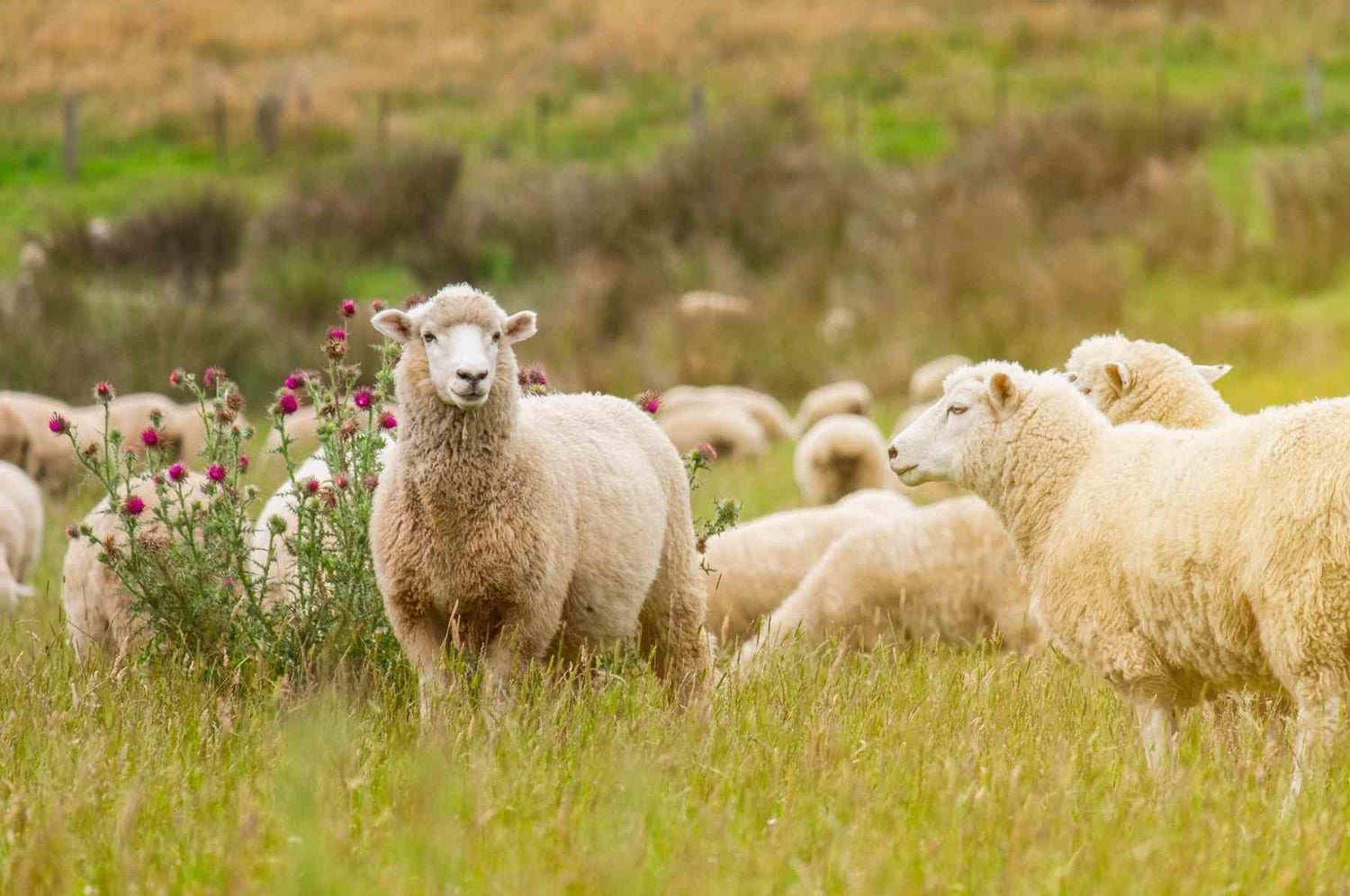
Wool is an incredibly versatile raw material that is currently enjoying increasing popularity. Whether it's sweaters, slippers, or even sneakers – more and more manufacturers in the textile industry want to harness the thermo-regulating properties of wool.
One reason for the steadily growing demand for wool and felt products is certainly the consumers' increased environmental awareness.
Wool, as a natural, biodegradable material, at first glance appears to be a prime example of sustainable materials.
But how sustainable is wool really?
In the following article, I will address the ethical and ecological aspects to consider if you want to buy wool and felt products with a clear conscience (reading time 5 minutes).
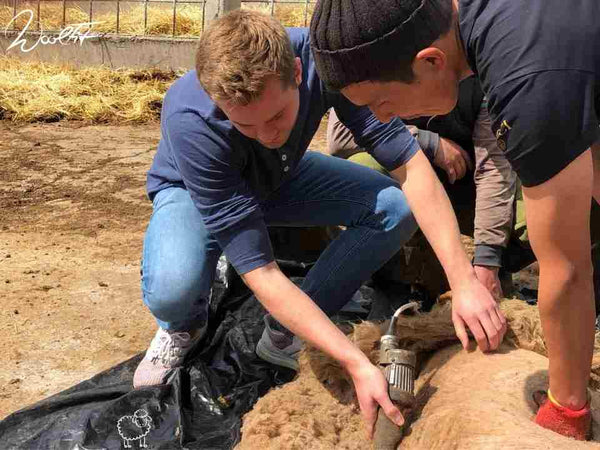
For my research, I consulted various scientific articles and even tried my hand at sheep shearing on a Kyrgyz sheep farm (on the left in the picture, though I left the tricky parts to the professional).
Ethical aspects of the wool industry:
Wool, as everyone should know, is an animal fiber. The majority of wool comes from sheep, specifically their fleece. But it also comes from other animals, such as goats (cashmere and mohair), alpacas, rabbits (angora wool), or even yaks and camels. For those who live a strict vegan lifestyle, wool is therefore generally not an option, but more and more people are choosing their vegan lifestyle for reasons of sustainability and animal welfare. Since no animal usually has to be killed for wool, the origin of the wool is crucial.

Animal welfare problem "Mulesing" in Merino wool: Merino sheep are known for their particularly cuddly and soft fleece. These sheep are bred specifically for wool production, resulting in a lot of skin on which wool is supposed to grow. However, parasites, such as blowfly larvae, often nest between these skin folds in the tail area. Mulesing involves removing these skin folds.
Mulesing is therefore a type of circumcision to eliminate the problems caused by overbreeding. It is usually performed on young animals because their wounds heal faster. It is beyond question that this is a traumatic experience for the young animals. Particularly concerning is that the operation is traditionally performed without anesthesia.
90% of Merino wool comes from Australia, where mulesing is still practiced. If you want to ensure that you are buying mulesing-free Merino wool, you must look for appropriate certificates or the country of origin, as mulesing is prohibited in New Zealand, for example.

Shearing a sheep during my visit to a sheep farm in Kyrgyzstan. The former nomads still keep their sheep in a traditional way, moving from pasture to pasture. The sheep there are traditionally bred for meat production, and the wool is only a byproduct. Mulesing is not necessary for these sheep, as they are a special breed: the Kyrgyz fat-tailed sheep.

Animal welfare must also be observed during shearing. Especially with breeding sheep optimized for wool production, it is difficult to shear the animals without injury. With normal sheep, however, it is like a visit to the hairdresser. A good shearer can be recognized by the fact that the fleece still hangs together in one piece, as shown in the picture.
Sheep are shorn once a year between May and July. This is necessary because otherwise the fleece becomes too long and dirt gets caught in the wool, which can lead to diseases or discomfort for the sheep.
Ecological aspects:
Which is more sustainable, wool or cotton? Which of the two natural raw materials has a smaller ecological footprint?
To answer this question, one must unequivocally say: it depends!
Because here too, the origin and the method of extraction are crucial.
One of the world's largest cotton producers, for example, is Uzbekistan. The dry and hot climate is ideal for the growth of cotton plants, but they require a huge amount of water for growth, as it is actually a rainforest plant.

Water from the Aral Sea, which originally held 125 times as much water as Lake Constance, was used to irrigate the cotton plants. It has now shrunk by half, and the water is saltier than seawater, leaving the population with hardly any drinking water. In addition, enormous amounts of fertilizers and pesticides are spread on the fields. For a T-shirt, according to estimates, a total of approximately 2500 liters of water are consumed.

But how does wool compare?
That depends entirely on the type of husbandry and agricultural purpose. For mass livestock farming in dry Australia, enormous amounts of water are also needed - even more than for cotton. In traditional sheep farming, where shepherds move with their sheep from pasture to pasture, everything remains in the cycle.
Green spaces grazed by sheep are even healthier, as the sheep eat weeds and consolidate the soil layer.
For our WoolFit slippers, for example, we use wool from Kyrgyz shepherds who keep their animals in the traditional nomadic way.
Here, wool is only a by-product, as meat traditionally ranks very high on the nomads' menu. Until there is a rethink in this regard, wool will continue to be a by-product of breeding.
In the more remote areas of Kyrgyzstan, shepherds often do not have the opportunity to sell their wool because there is an oversupply and only meat is traded. Our production provides these shepherds in the smaller villages with so-called "wool collection points," where they can profitably sell their wool. The high-quality wool is processed into slippers and clothing, the rest into insulation wool.

In this context, wool can certainly be described as a very sustainable raw material. What is important in any case is where and how the wool is produced. German wool can also be bought with a clear conscience, but the mass-produced product from Australia leaves a certain bitter taste. In any case, one should value the materials used in the textile industry more highly.
I hope I have been able to give you a comprehensive overview of the topic. For a final "sustainability decision," other factors such as the lifespan of products, the methane emissions of sheep (about one-tenth of cattle emissions), or regionality will certainly be added. It is certainly more sustainable to buy German wool instead of wool from Kyrgyzstan. However, at WoolFit, we also want to support the people in Kyrgyzstan and Nepal who have specialized in the production of wool and felt products for centuries and depend on this sector. Our goal is to holistically live the idea of sustainability, also in an economic context.
Benni from WoolFit